Key Takeaways
- An idle loaner costs the same to own as a busy one. At 70% utilization, a 40-unit fleet sits parked about 4,380 vehicle-days a year.
- Idle days never show up on an invoice, so nobody manages them. On modeled numbers they cost a 40-unit fleet $51,000 to $99,000 a year.
- Buying more cars is the expensive fix. Turning them around faster is the cheap one: one dealer group recovered $12,750 a month that way.
- A car parked while it earns OEM program days is not idle. Telematics shows you where a car is, not whether it is still paying its way.
- GM pays $46 a day for an overnight loaner and $23 for a same-day one, and caps most loans at 3 to 5 days. Ford, Toyota and BMW publish nothing.
- No loaner means no repair order. Dealer share of service visits is down 12 points since 2018, and the average repair order is worth $470.
Idle days never arrive as an invoice. They sit inside the floorplan line, and most loaner fleet management still has no way to surface them.
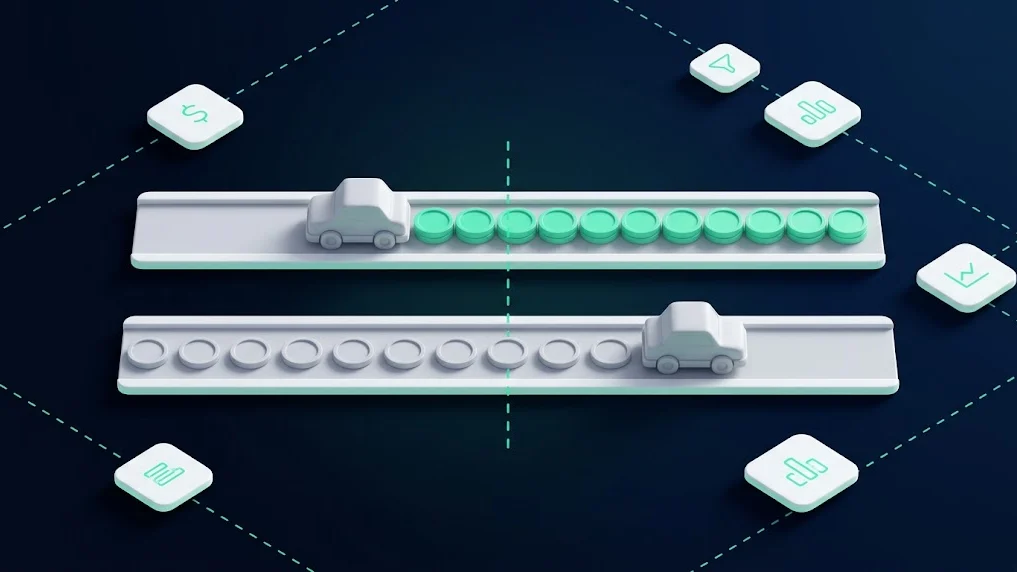
A 40-unit loaner fleet running at 70% utilization parks roughly 4,380 vehicle-days a year. Each of those days carries the same depreciation, floorplan interest and insurance cost as a day the unit is out on a repair order.
This article walks through what an idle loaner day actually costs, a framework for calculating your own number, the four operational levers that shrink it, and what OEM courtesy transportation programs reimburse today. Run the math against your own fleet by the end.
What is loaner fleet management?
Loaner fleet management is how a dealership sources, assigns, tracks and cycles the courtesy vehicles it lends to service customers. It covers utilization, digital agreements and condition records, cost recovery on fuel, tolls and damage, OEM courtesy-transportation compliance, and the timing of each unit’s move into used inventory.

A loaner fleet is not a revenue product the way a rental fleet is. A rental company charges a fee for every day a car is out; a loaner exists to keep a service customer moving while their vehicle sits on a lift, usually at no charge to the customer and often reimbursed in part by the OEM.
The two operations can run on the same software, but the math is different: a rental day is billable the moment it starts, and a loaner day is a cost until the customer’s repair order closes.
What an idle loaner day actually costs
No dealer publishes a repeatable formula for this today. That gap is exactly why idle days disappear into overhead instead of showing up on anyone’s P&L. Use this framework to calculate your own number.
A worked example. The inputs below are proxies, not loaner-specific benchmarks, and are labeled as such:

No published industry average exists for loaner-specific daily holding cost. That’s the reason to run this calculation against your own fleet rather than borrow someone else’s number.
The four levers that reduce idle days
Lever 1: Cycle time, not fleet size
The instinct when loaners run out is to buy more units. The cheaper fix is shortening the loan: the gap between a vehicle coming back and going back out again, through cleaning, damage review, fuel reconciliation and reassignment.
Cox Automotive documents a 150-unit dealer group (opens in a new tab) in the D.C. area that cut fuel and toll reconciliation from 30-plus days down to 24-48 hours, recovering $12,750 a month net against a $3,750 monthly telematics spend.
Cox labels the figure illustrative, not a guaranteed outcome, and it’s worth reading that way. The mechanism, faster reconciliation and faster reassignment, is the lever regardless of the exact dollar figure at your store.
Lever 2: Assignment visibility, not assignment memory
Idle days concentrate in units nobody remembers are free. A whiteboard or a spreadsheet works until the fleet grows past a size one person can hold in their head.
A live availability timeline and same-day reassignment on return close that gap directly.

Lever 3: Condition evidence at handoff and return
Damage disputes hold units off the line while two people argue about a scratch.
Photo-based condition records at both ends turn a three-day argument into a same-day charge and free the unit to go back out.
Lever 4: Program-aware cycling to used inventory
Hold a loaner too long and depreciation eats the margin when it finally sells. Cycle it out too early and you forfeit OEM incentive eligibility that was still accruing.
Fender Bender’s benchmark (opens in a new tab) points to roughly 30,000 miles and an 18-month hold as the sweet spot. That figure dates to 2017, so re-validate it against today’s used-vehicle values before you build a policy around it.
What OEM courtesy transportation programs actually pay
An OEM courtesy transportation program is a manufacturer’s reimbursement system for the loaner or rental vehicles a dealer provides to customers during a warranty repair.
Every major manufacturer runs one under its own name: GM’s Courtesy Transportation Program (CTP), Ford’s Courtesy Transportation Program (FCTP), Toyota’s Transportation Assistance Program (TTAP), and so on.
Each sets its own daily rates, vehicle-age limits and maximum loan length, and reimbursement is filed against the repair order through the OEM’s warranty system rather than paid out separately. Enrollment and claim filing happen through the same warranty portal a service department already uses for repair reimbursement.
Public documentation of these programs is thin, and most dealers end up guessing at rates a manufacturer has already published. GM’s numbers are a public primary source, filed in a bulletin with NHTSA (opens in a new tab), and they’re the most verifiable data point available anywhere on this topic:

GM’s standard daily reimbursement moved from $38/day in 2013 (opens in a new tab) to $46/day in 2025, a 21% increase over twelve years that falls well behind vehicle cost inflation over the same period. Every dollar of that gap comes out of the dealer’s floorplan.
Ford (FCTP), Toyota (TTAP) and BMW don’t publish their reimbursement schedules. Ford FCTP units typically come back to the lot at 2,000-4,000 miles carrying full new-vehicle warranty, which makes them attractive certified pre-owned inventory.

Why loaner availability is a fixed-ops retention issue, not just a cost issue
Every idle day is also a missed opportunity, because a loaner that isn’t available is a service customer who takes their repair order somewhere else.
Cox Automotive’s 2025 Service Industry Study (opens in a new tab) puts dealer share of service visits at 29%, down 12 points since 2018. For vehicles under two years old the drop is steeper: 68% down to 55%.
The stakes keep rising at the same time: average dealer service and parts revenue reached $9.23 million in 2025, up 33% from $6.95 million in 2018, per the same study.
The per-visit numbers back this up. NADA Data’s Mid-Year 2025 report (opens in a new tab) puts the average customer-pay repair order at $470, with fixed operations now accounting for 13.2% of total dealership sales dollars.
Reynolds & Reynolds’ Fixed Operations Golden Metrics 2025 (opens in a new tab) reports major urban stores billing an effective labor rate of $166.88/hour across 2.12 hours per repair order, for $413.76 in profit per customer-pay RO. Haig Partners (opens in a new tab) tracked fixed-ops gross profit up 7.5% same-store in 2025.

Customers notice loaner availability directly. J.D. Power survey data reported via Dealerware (opens in a new tab) found that 90% of mass-market customers would choose a dealer that offers loaners, 78% treat the loaner as an extended test drive, and 70% say it makes them more likely to come back and buy.
A unit sitting idle isn’t just a carrying cost. It’s a $470 repair order and a test drive that goes to a competitor instead.
Loaner fleet management software: what to look for
Buying software won’t fix a broken process by itself, but the right platform makes every lever above easier to execute. Compare capabilities, not vendor names:

A telematics device alone answers “where is the car.” It doesn’t answer “is this unit reimbursable today,” “who’s had it for nine days,” or “is this the week to cycle it into inventory.”
Those are the questions that actually move the annual idle cost number from the framework above. RentWorks Plus covers each of these natively. See how telematics (opens in a new tab), rental agreements (opens in a new tab), reporting and analytics (opens in a new tab), and reservations (opens in a new tab) work together for dealership loaner fleets (opens in a new tab).

Frequently Asked Questions
What is a loaner fleet at a dealership?
A loaner fleet is a set of vehicles a dealership’s service department lends to customers, usually at no charge, while their own vehicle is being repaired. It’s managed separately from sales inventory and, at many dealers, separately from any rental operation, even when the same staff and lot handle both.
How many loaner cars does a dealership have?
There’s no published national average. A commonly cited example, a 40-unit fleet at Acura of Peabody, gives a rough sense of scale for a mid-size store, but fleet size depends on service volume, OEM program enrollment and facility capacity. Calculate your own target from repair-order volume rather than a benchmark.
How is a loaner car different from a rental car?
A rental car generates revenue for every day it’s out. A loaner exists to support a service customer and is usually free to them, sometimes partly reimbursed by the OEM. The vehicles can be the same units on the same lot, but a rental day is billable and a loaner day is a cost until the repair order closes.
How long can a customer keep a loaner vehicle?
It depends on the OEM program and the repair. GM’s courtesy transportation program allows up to 3 calendar days for locally sourced parts and 5 days for express-shipped parts before requiring separate authorization; loans of 7 or more days need GM Authorization in Global Warranty Management. Other OEMs set their own thresholds.
Are dealership loaner cars tracked by GPS?
Many are, either through a standalone telematics device or a rental management platform with built-in GPS and mileage capture. Tracking matters most for OEM programs that reimburse based on days or miles, since the dealer needs a defensible record to file a claim.
How much do dealerships pay for a loaner program, and what do OEMs reimburse?
Reimbursement varies by manufacturer. GM publishes its rates: $46/day for an overnight courtesy loaner and $23/day for a same-day loaner as of its February 2025 bulletin, with separate caps for third-party rentals and fuel. Ford, Toyota and BMW do not publish comparable rate schedules.
What is loaner fleet utilization, and what is a good rate?
Loaner fleet utilization is the share of available vehicle-days a fleet spends assigned to an open repair order or accruing OEM program credit. No verified industry benchmark for a “good” rate has been published. Use the idle-rate formula above and track your own trend rather than chase an unverified number.
When should a dealership cycle a loaner into used inventory?
The commonly cited benchmark is around 30,000 miles or 18 months of service, whichever comes first, though that figure dates to 2017 and is worth checking against current used-vehicle values before adopting it as policy. Cycling too early forfeits OEM incentive days still accruing; too late erodes resale value through depreciation.
The bottom line
Idle days are the only loaner cost that never sends an invoice, which is exactly why they go unmanaged.
Meanwhile dealer share of service visits has dropped 12 points since 2018, and every loaner sitting idle is a customer who can take that repair order, and the test drive that comes with it, to someone else.
See your loaner fleet’s idle days on one timeline. Book a demo → (opens in a new tab)
What’s your loaner fleet’s idle rate, and do you have a way to see it today?