

Physically audit your rental fleet — every VIN, every lot
Run inventory sessions to confirm every vehicle in the system matches where it physically sits — VINs, keys, and lot assignments reconciled in one pass.
Run an inventory session on the lot
Open a session for a branch or lot, scan or key in each VIN as you walk it, and mark the row confirmed. The system compares the physical count to what it thinks it has and highlights anything that does not line up.
Reconcile location and status mismatches
When a vehicle is found in a different lot, moved between branches, or missing entirely, the session logs the exception. Reassign the correct location, update status, or flag the unit for follow-up before you close the session.
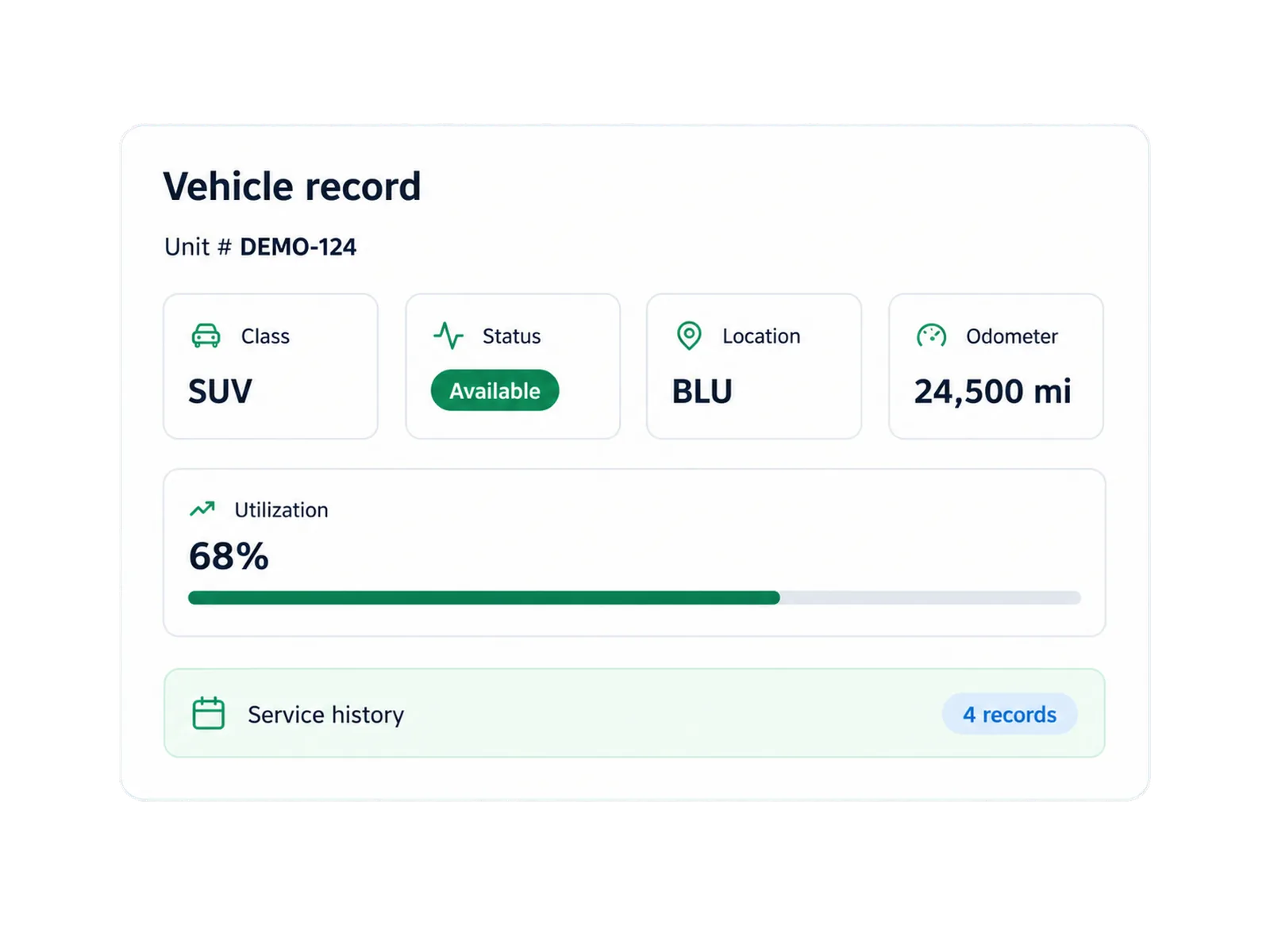
Keep every VIN, key set, and stall accounted for
Track physical assignments — lot, row, stall, key drawer — so counter and prep teams stop guessing where a car is. Every audit updates the record other modules already rely on.
Close the audit with a documented result
When the count is complete, the session posts a signed record: who audited, when, what changed, and how many mismatches were resolved. Keep the trail for internal control and franchise reviews.
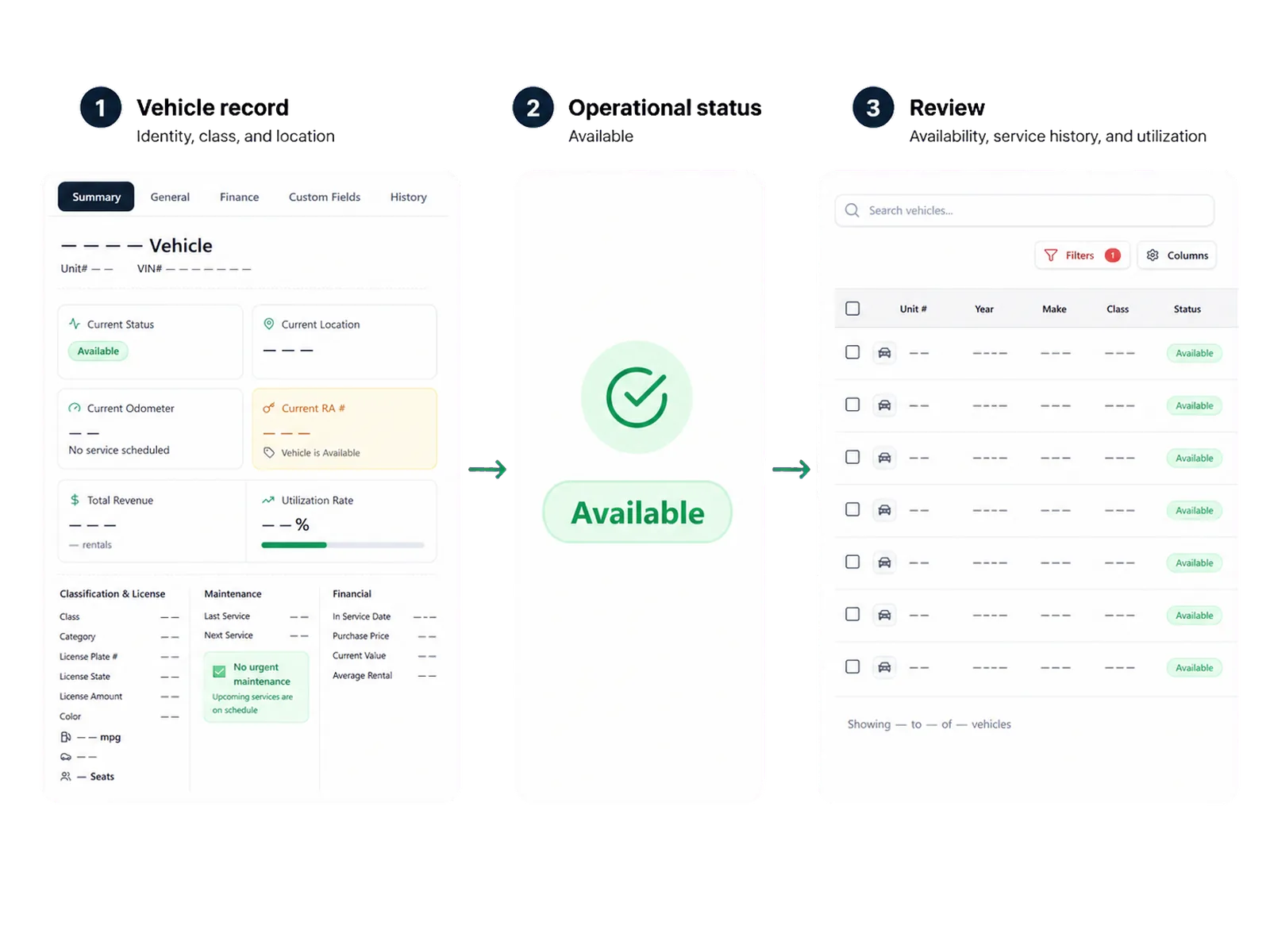
How it flows
Three moments that make this real inside a working rental day.
Input
Run an inventory session on the lot
Working state
Reconcile location and status mismatches
Outcome
Close the audit with a documented result
Answers before your demo
Common questions from operators evaluating this capability.
What does a RentWorks Plus vehicle record include?
The supported scope includes unit status, availability, ACRISS class, location, supported holds, service history, and utilization context. Other fields depend on the configured setup.
How does vehicle status affect availability?
Configured status controls can remove a unit from bookable inventory while a supported hold, maintenance need, or repair status is active. Staff review the vehicle before returning it to the plan.
Can fleet fields be imported or exported?
Validated CSV tasks can support supported fleet fields. The maintained field list, format, history, documents, and access follow the scoped configuration.
What is the difference between Inventory and Fleet Management?
Inventory Management focuses on the unit record, classification, location, status, availability controls, and supported data tasks. Fleet Management focuses on operating status, assignments, service, repairs, inspections, and utilization context across vehicles.
Review the vehicle record your team needs
Each vehicle still carries its identity, status, service history, and utilization context — inventory audits keep that record trustworthy.